

Hi friends,
Sure, Texas (among others) needs a reliable electric grid. But when massive transmission lines are routed through rural communities, the question cannot be only what the grid needs. It must also be what happens to the people, land, families, and communities being asked to carry the burden.
Technology may power the future, but people still live on the land. If Texas forgets that, then progress becomes just another word for sacrifice.
And let us remember that much of this land is farm and ranch land. Food and water are necessary for people’s survival as well as for national security. People are more important than big business.
When the Power Line Comes Through Your Pasture
There is a sentence we hear over and over again whenever a major infrastructure project is proposed:
“We need this for progress.”
Sometimes that is true. Texas is growing. Our electric grid does need serious planning. More people, more industry, more data centers, more oil-and-gas electrification, and more demand all mean the state cannot simply pretend the grid will take care of itself.
But there is another sentence that deserves just as much attention:
“What happens to the people who have to live with it?”
That is the part too often treated as secondary.
A recent Dallas Morning News article told the story of rural Texans organizing against a proposed 765-kilovolt transmission line known as the Dinosaur–Longshore project. The line would run across a large stretch of rural Texas, from the Glen Rose area toward West Texas, as part of a much larger plan to move electricity across the state.
To utility planners, this may look like a route map.
To ERCOT, it may look like capacity.
To developers, it may look like economic growth.
But to the families who live there, it looks like something very different.
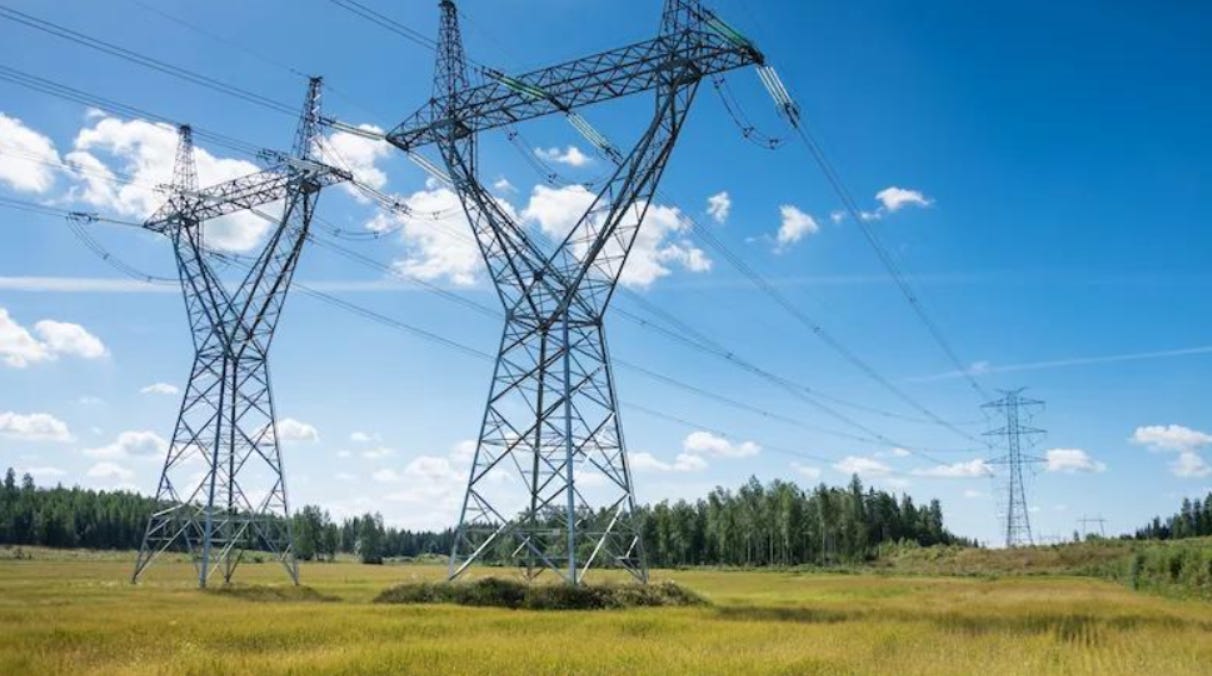
It looks like a steel tower near the house they built.
It looks like a cleared right-of-way through pastureland.
It looks like interference with ranching, farming, vineyards, schools, views, wildlife, and family property that may have been held for generations.
It looks like a decision made somewhere else, by people who may never have to look at it from their kitchen window.
And that is why this story matters.
This Is Not Anti-Electricity
Let’s be clear. Opposing a specific transmission route, or demanding better transparency, is not the same as opposing electricity, technology, or economic development.
Texas does need reliable power.
Texas does need to plan for the future.
Texas does need a grid that can handle growth.
But planning for the future should not mean treating rural Texans as an afterthought. It should not mean that landowners only find out how serious a project is once the maps are drawn, the hearings are scheduled, and the legal process is already moving.
A 765-kV transmission line is not a minor neighborhood upgrade. These are massive high-voltage lines, with large steel structures and wide easements. Once built, they can permanently change the character and use of the land.
That means the public deserves more than technical assurances.
They deserve early notice.
They deserve plain-English explanations.
They deserve real public meetings, not just procedural checkboxes.
They deserve maps that are easy to access and understand.
They deserve to know who benefits, who pays, who sacrifices, and what alternatives were considered.
Most of all, they deserve to be treated as people, not obstacles.
Technology Is Moving Faster Than Accountability
This is part of a bigger pattern we are seeing across Texas.
Data centers are being proposed in rural and semi-rural areas.
Battery energy storage facilities are being pushed into communities that often have little experience regulating them.
Transmission lines are being planned to move electricity across long distances.
Water demand is rising.
Land use is changing.
And all of it is being justified in the name of growth, modernization, reliability, or economic development.
Those words sound good. But they can also become a way to avoid harder questions.
Growth for whom?
Reliability for whom?
At whose expense?
What happens when rural communities bear the land burden while the major benefits flow to industrial users, urban growth corridors, large technology companies, or distant energy markets?
That does not mean every project is bad. It means every project deserves scrutiny.
The danger is not technology itself. The danger is technology moving faster than transparency, faster than local understanding, faster than landowner protections, and faster than common sense.
The Human Cost Must Come First
One of the most important parts of the Dallas Morning News story was not just the proposed power line itself. It was the way local residents came together to help each other understand the process.
That should tell us something.
When ordinary citizens have to become overnight experts in utility regulation just to defend their homes, something is wrong with the system.
A grandmother should not have to decode Public Utility Commission procedures to understand whether her land may be crossed.
A rancher should not have to become a legal researcher just to file testimony.
A small school or local business should not have to scramble to determine whether a route could affect its future.
The burden should not be on citizens to chase down clarity.
The burden should be on state agencies, utilities, and project planners to provide it from the beginning.
That means more than posting technical documents online and saying the information is “available.” Available is not the same as understandable. Legal notice is not the same as meaningful notice. A hearing process is not the same as genuine public participation.
If the state is going to approve infrastructure that permanently alters private land, then the process must be designed for regular Texans to understand and use.
Planning Should Include Precautions, Not Just Projections
Texas cannot afford sloppy planning dressed up as urgency.
Before massive transmission corridors are approved, the public should be able to see a full and honest accounting of the risks, tradeoffs, and alternatives.
That should include:
How many acres will be affected?
How many homes, farms, ranches, schools, churches, cemeteries, or businesses are near proposed routes?
What will happen to property values?
How will agricultural operations be affected?
Can existing corridors be used instead of cutting new paths through private land?
Are there better route options that reduce human impact?
Who is driving the demand: residential growth, oil-and-gas electrification, data centers, industrial load, renewable generation, or something else?
How much of the cost will ultimately be passed to ratepayers?
What happens if projected demand does not materialize?
These are not anti-growth questions.
They are responsible planning questions.
If the answer is, “Trust us,” that is not good enough.
Texans have seen too many examples of large projects being promoted with optimistic promises while local communities are left dealing with the consequences later. Whether the issue is reservoirs, pipelines, battery storage, data centers, or transmission lines, the pattern is similar: the project is presented as necessary, the benefits are emphasized, and the burdens are localized.
That imbalance needs to be corrected.
Rural Texans Are Not Empty Space
Too often, rural land is treated as if it is simply available.
Available for transmission.
Available for reservoirs.
Available for pipelines.
Available for industrial expansion.
Available for someone else’s plan.
But rural Texas is not empty space.
It is home.
It is livelihood.
It is food production.
It is family inheritance.
It is wildlife habitat.
It is local tax base.
It is community identity.
It is also part of the freedom Texans have long cherished: the ability to own land, work land, pass land to children, and live without every major decision being made by distant planners.
When government-approved infrastructure cuts through private land, it changes more than a map. It changes lives.
That reality should be central to the discussion, not an afterthought buried beneath engineering terms.
What Responsible Leadership Would Look Like
A people-first approach does not mean Texas stops building. It means Texas builds more carefully, more transparently, and more fairly.
Responsible leadership would require early disclosure before routes feel pre-decided.
It would require plain-language notices that explain what landowners need to do and by when.
It would require public meetings in affected communities, scheduled at times regular people can attend.
It would require online documents that are easy to search, download, and understand.
It would require meaningful comparison of alternatives, including use of existing corridors.
It would require clear explanation of who benefits financially and operationally.
It would require stronger landowner protections, better compensation standards, and long-term accountability.
It would also require state leaders to acknowledge something simple but often ignored: the people who live on the land are stakeholders, not speed bumps.
A Warning and an Opportunity
The 765-kV transmission fight is a warning.
It shows what happens when large-scale infrastructure planning collides with local life.
But it is also an opportunity.
Texas can decide to do this better.
We can modernize the grid without dismissing rural Texans.
We can plan for growth without pretending land impacts are minor.
We can support reliable power while demanding transparency.
We can recognize that technology may be useful, but people come first.
That principle should guide every decision.
Because the real test of progress is not whether planners can draw a line across a map.
The real test is whether they can look honestly at the families beneath that line — and plan with enough care, humility, and respect to protect them.
Sources:
Dallas Morning News — “Rural Texas residents came together to fight 765kV transmission line”
Oncor — Dinosaur to Longshore 765-kV Transmission Line Project
ERCOT — 2024 Regional Transmission Plan / Texas 765-kV Strategic Transmission Expansion Plan comparison
Public Utility Commission of Texas — Interchange / filing search
Public Utility Commission of Texas — General information for electric transmission line cases
As always, do your own research and make up your own mind.
White paper on land and water rights: Property Rights and Freedom: A White Paper on America’s Disappearing Land
United we stand. Divided we fall. We must not let America fall.
VoteTexas.gov, https://www.votetexas.gov/get-involved/index.html
Disclaimer:
As always, do your own research and make up your own mind. This Substack is provided for informational and commentary purposes only. All claims or statements are based on publicly available sources and are presented as analysis and opinion, not legal conclusions.
No assertion is made of unlawful conduct by any individual, company, or government entity unless such claims are supported by formal public records or verified legal documents. The views expressed here reflect my personal perspective on property rights and land use issues.
While I strive for accuracy and transparency, readers are encouraged to verify all details using the official sources and references provided. Any references to third-party material are included solely for your consideration and do not necessarily reflect my views or imply endorsement.
If you share this content, please include this disclaimer to preserve context and clarity for all readers.
Until next time…
Please share your thoughts in the comments. Or email me, and let’s have a problem-solving conversation. I welcome ‘letters to the editor’ type emails and may publish yours. I hope we can create a caucus with positive, back-to-the-founders’-dream-for-America results. Have a topic you want to know more about?
Some housekeeping…
Going forward, you may need to check your spam folder. And please mark this address as ‘not spam.’ If the newsletter isn’t in your spam folder either, you should look in the Promotions tab.
You can always see everything on the website, RationalAmerican.org.
Thanks again for reading! I’m glad you’re here!