

Hi friends,
Good news that the many concerns that have been expressed are being taken into consideration and more research will be done to address the possible issues.
Texas Regulators Hit Pause on First Segment of Massive 765-kV Transmission Buildout
For months, Texans concerned about the state’s proposed 765-kV transmission buildout have been told the project was moving forward as planned.
This week, something changed.
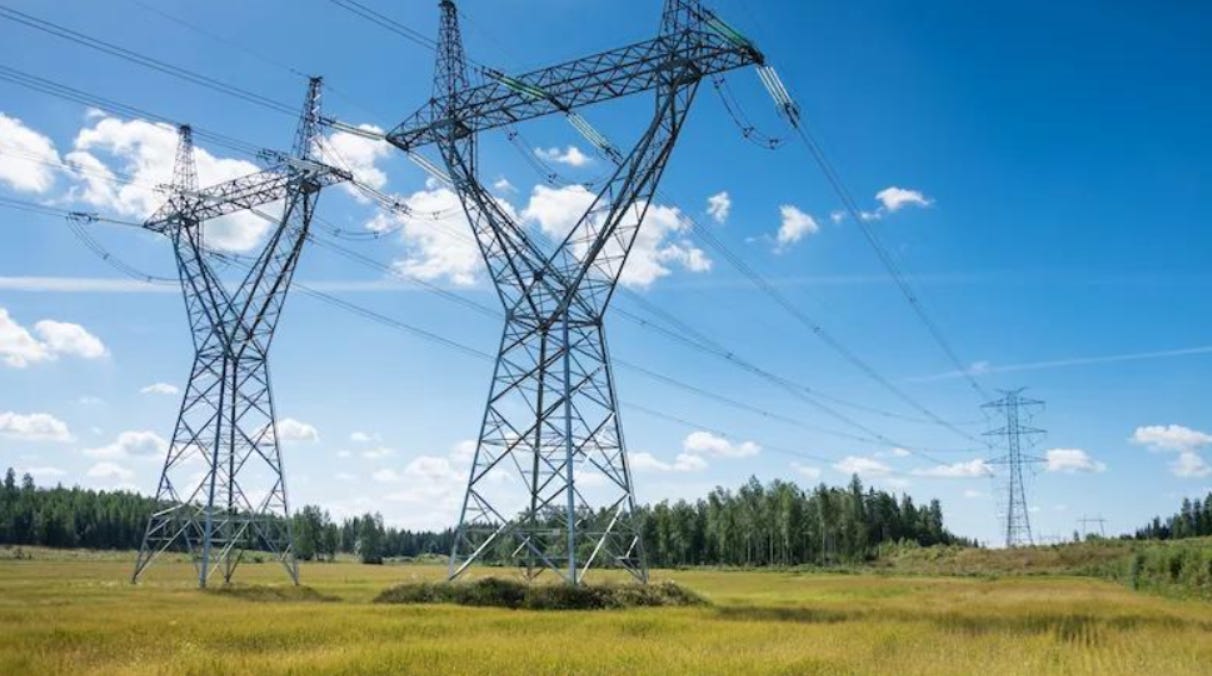
The Public Utility Commission of Texas (PUCT) voted to postpone consideration of the first segment of the proposed Strategic Transmission Expansion Plan (STEP), a massive network of extra-high-voltage transmission lines designed to move electricity across large portions of Texas and into the Permian Basin.
The decision does not stop the project. It does not cancel the project. But it does signal that regulators are willing to slow down and take a closer look before moving forward.
That alone makes this one of the most significant developments in the 765-kV debate to date.
What Is STEP?
The Strategic Transmission Expansion Plan (STEP) is part of the broader Permian Basin Reliability Plan approved by the PUCT in 2025.
Supporters argue that major transmission investments are needed to meet growing electricity demand and improve reliability in West Texas, particularly in the Permian Basin.
Critics argue that the plan has grown far beyond what lawmakers originally authorized and that Texans deserve a more thorough review before billions of dollars are committed and thousands of acres of private property are affected.
According to research from the Texas Public Policy Foundation’s Life: Powered initiative, the approved 765-kV projects could cost approximately $33 billion to build and approach $100 billion in lifetime costs.
The Debate Has Changed
When this issue first surfaced, most of the attention focused on routing.
Landowners wanted to know where the lines would be built, whether eminent domain would be used, and how their farms, ranches, homes, and businesses might be affected.
Those concerns remain.
But over the last several months, the debate has expanded dramatically.
Questions now being raised include:
Are the lines actually necessary?
Were alternatives fully considered?
Could additional generation be built closer to where power is needed?
Were affected landowners given adequate notice and opportunity to participate?
What are the long-term impacts on private property, ratepayers, and rural communities?
These questions have transformed what began as a routing dispute into a much broader discussion about energy policy, property rights, government process, and infrastructure planning.
A Growing Coalition
Opposition to the project is no longer limited to individual landowners.
American Stewards of Liberty recently asked the PUCT to delay deciding whether several of the proposed transmission segments are actually needed until additional proceedings are completed.
The Texas Public Policy Foundation has published research arguing that alternative approaches—including additional natural gas generation in West Texas—could potentially reduce or eliminate the need for portions of the 765-kV buildout.
Most notably, 43 Texas legislators—34 members of the House and 9 members of the Senate—recently filed an amicus brief urging regulators to slow down and fully evaluate the project’s need before irreversible decisions are made.
Their concerns include ratepayer costs, private property impacts, and whether the current plan represents the best solution available.
Good News
Perhaps the most important shift is this: The central question is no longer simply where the lines should go.
The question increasingly being asked is whether all of the proposed lines should be built at all. That is a very different debate. Transmission lines move electricity. They do not generate it.
Critics argue that Texas should carefully examine whether other options could improve reliability while reducing costs and minimizing impacts on private property.
Supporters maintain that the transmission buildout is necessary to meet future demand and keep power flowing where it is needed.
Reasonable people can disagree on the answer.
But the size of the project, the potential costs, and the long-term effects on Texas landowners suggest that these questions deserve serious consideration.
What Happens Next?
The PUCT’s decision to postpone consideration of the first segment does not resolve the dispute.
Additional hearings, filings, and commission decisions still lie ahead.
However, the pause signals that regulators recognize the interconnected nature of these projects and that the debate surrounding them is far from settled.
Whether the final outcome favors transmission expansion, alternative solutions, or some combination of both, one thing is becoming clear:
The discussion has moved beyond transmission routes.
Texas is now engaged in a broader conversation about reliability, cost, property rights, local impacts, and who should decide how the state’s energy future is built.
Additional sources:
PUC Docket 59475 (Bell County East–Big Hill)
https://interchange.puc.texas.gov/Search/Filings?ControlNumber=59475
Texas Scorecard – Lawmakers Join Push to Pause Transmission Lines (June 16, 2026)
https://texasscorecard.com/state/lawmakers-join-push-to-pause-transmission-lines/
Texas Scorecard – Pro-Landowner Nonprofit Seeks Pause on Determining Need for Transmission Line (June 10, 2026)
https://texasscorecard.com/state/pro-landowner-nonprofit-seeks-pause-on-determining-need-for-transmission-line/
Texas Public Policy Foundation – Legislators Urge PUC to Delay Vote
https://www.texaspolicy.com/press/texas-legislators-urge-puc-to-delay-vote-on-765-kv-transmission-facilities
KXAN – Texas Landowners Fight Massive Transmission Line Project at Austin Hearing
https://www.kxan.com/energy-crossroads/texas-landowners-fight-massive-transmission-line-project-at-austin-hearing/
Oncor – Bell County East–Big Hill 765-kV Project
https://www.oncor.com/content/oncorwww/us/en/home/about-us/transmission-systems/current-transmission-line-projects/bell-county-east---big-hill-765-kv-transmission-line-project.html
Amicus Brief
https://interchange.puc.texas.gov/Documents/59029_465_1656879.PDF
As always, do your own research and make up your own mind.
White paper on land and water rights: Property Rights and Freedom: A White Paper on America’s Disappearing Land (8/13/2025)
United we stand. Divided we fall. We must not let America fall.
VoteTexas.gov, https://www.votetexas.gov/get-involved/index.html
Disclaimer:
As always, do your own research and make up your own mind. This Substack is provided for informational and commentary purposes only. All claims or statements are based on publicly available sources and are presented as analysis and opinion, not legal conclusions.
No assertion is made of unlawful conduct by any individual, company, or government entity unless such claims are supported by formal public records or verified legal documents. The views expressed here reflect my personal perspective on property rights and land use issues.
While I strive for accuracy and transparency, readers are encouraged to verify all details using the official sources and references provided. Any references to third-party material are included solely for your consideration and do not necessarily reflect my views or imply endorsement.
If you share this content, please include this disclaimer to preserve context and clarity for all readers.
Until next time…
Please share your thoughts in the comments. Or email me, and let’s have a problem-solving conversation. I welcome ‘letters to the editor’ type emails and may publish yours. I hope we can create a caucus with positive, back-to-the-founders’-dream-for-America results. Have a topic you want to know more about?
Some housekeeping…
Going forward, you may need to check your spam folder. And please mark this address as ‘not spam.’ If the newsletter isn’t in your spam folder either, you should look in the Promotions tab.
You can always see everything on the website, RationalAmerican.org.
Thanks again for reading! I’m glad you’re here!
Thanks! Yes, Permian Basin is a story unto itself. I hadn’t learned about possible green power. I’ll do some research.
Isn't the Permian Basin floating on a sea of gas and oil? Why not build a gas fired generation facility and provide the power locally? Let the oil companies build it and run it. Sell extra power to the grid. Data centers are doing it, why not the oil Companies. I understand some oil companies have wind turbines to power pump stations. Is this true? If so the precedent is already set.