

Hi friends,
If you’ve been following my posts on Texas’ proposed 765-kV transmission lines, there’s been another important development—and it’s becoming clear this debate is about much more than where power lines will be built.
It’s about who gets to decide Texas’ energy future.
Recently, a coalition of organizations that support the transmission project publicly opposed lawmakers’ request to pause the project until the Texas Legislature can review it during the 2027 session.
Supporters of the project argue that delaying construction will increase costs and make the electric grid less reliable. Their position is that Texas’ rapid growth requires long-term planning and that these transmission lines are essential to meet future demand.
On the other side are a growing number of landowners, policy organizations, and state legislators who are asking for something that sounds fairly straightforward:
Before Texas builds more than 1,200 miles of new extra-high-voltage transmission lines across private property, should the state first take a closer look at the alternatives?
That question has become the heart of the debate.
One of the biggest concerns raised by critics is that the current plan assumes Texas will continue relying heavily on wind and solar generation in the future. They argue that other options—particularly new natural-gas generation located much closer to where electricity is needed in the Permian Basin—were never fully evaluated before moving forward with the transmission plan.
That question has become even more interesting in light of recent announcements showing major companies investing in local power generation for large industrial facilities in West Texas. While those projects don’t prove transmission isn’t needed, they do demonstrate that generating electricity closer to where it will be used is a viable approach that deserves careful comparison.
The controversy has now moved beyond technical engineering discussions. It has become a broader policy debate about planning priorities, property rights, costs, and reliability.
A Key Date to Watch
The next major milestone is July 29, when the Texas Senate Business & Commerce Committee will hold an interim hearing titled:
Assessing the State of the Texas Electric Grid, and Managing the Impacts of 765-kV Transmission Lines on Private Property.
This hearing is significant because legislators will hear testimony not only from utilities and technical experts, but also from landowners, advocacy organizations, and ordinary Texans affected by the proposed transmission corridors.
Interim hearings don’t create new laws, but they often shape legislation for the next legislative session. The discussion on July 29 could influence how lawmakers approach transmission planning, property rights, and electric-grid policy in 2027.
Every Texan Has a Stake
No matter where you stand on the issue, every Texan has a stake in this conversation.
These decisions could affect:
electric reliability,
future electric rates,
private property rights,
the location of major infrastructure,
and how Texas powers its continued growth.
As I’ve continued researching this topic, one question keeps coming up:
Before Texas commits to hundreds of miles of new transmission corridors, have policymakers fully compared long-distance transmission with local power generation, considering cost, reliability, water use, and impacts on private property?
It’s an important question—and one that deserves a transparent answer before decisions with decades-long consequences become permanent.
If you want to know more, here is an email from True Texas Project with details and action items:
Hello, True Texans!
Next week we have an important opportunity to speak out about an issue that should concern everyone in Texas. Please plan to take action as you are able:
July 29, Senate Business and Finance Committee - Assessing the State of the Texas Electric Grid, and Managing the Impacts of 765kv Transmission Lines on Private Property
Most Texans are anxious about the reliability of the electric grid, and the newly proposed 765kv transmission lines are of great concern due to private property rights, environmental safety for people and animals, higher electricity rates for all ratepayers, and the long-term effect of these lines. There are also questions about the Public Utility Commission’s rushed timelines that do not give adequate time for public input.
Background on 765kv
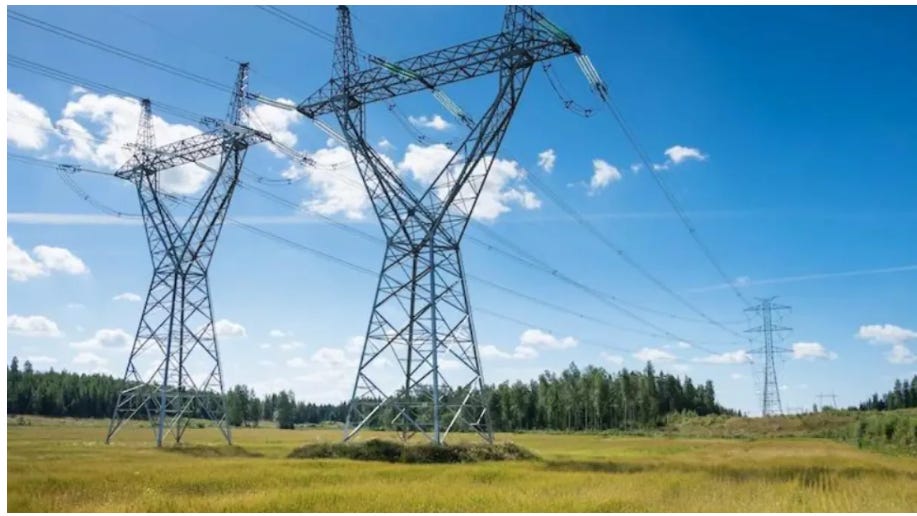
In 2023, the legislature passed HB2023 which was intended to expand electric services in the Permian Basin, where oil & gas development and other industries’ demand are outpacing supply. But ERCOT and the PUCT have now expanded that into a plan that uses these extremely high-powered transmission lines to bring power all the way from East Texas to far West Texas. (Towers that are 14 stories high, carrying 765 THOUSAND volts of electricity)
American Stewards of Liberty has produced numerous articles and studies on the potential dangers of these high-powered lines, as well as the property rights issues involved. Land is being taken up by eminent domain, and no compensation provided for damage to adjacent land. Land owners in the path of the power lines have been given very little time to provide public input because ERCOT is rushing the process.
Some state lawmakers have asked for a pause in the project so that alternative solutions can be examined, and the efficacy of the proposed lines can be verified (or not).
For more information on the issue, Texas Scorecard has written multiple articles about the 765kv lines. Take a moment to check them out.
On July 29, the Senate Business and Commerce Committee will take public and private testimony on the 765kv power lines. This is a golden opportunity for citizens to weigh in on this issue. Several groups will be at the Capitol coordinating testimony, including American Stewards of Liberty, and Ratepayers First Texas. Ratepayers First has a helpful web page with instructions and details for attending the hearing. They will also be set up in the legislative conference center (1 floor below) all day to help and advise.
ACTION ITEMS
Attend the hearing and give testimony: July 29, starting at 9:00 am, Room E1-012. Register to speak at the computer kiosk outside the meeting room. The earlier you register, the earlier you will get called when public testimony begins. It will probably be an all day and into the night situation. This is particularly important if you are a land owner that is affected by the position of the proposed lines, but it’s an issue that will affect everyone who pays electric bills. Tell how this issue will affect YOU, your family, or your business.
If you are not able to attend, send emails to the Committee Members. Click here for a list of Committee Members. Use their state email address firstname.lastname@senate.texas.gov. Example: Charles.schwertner@senate.texas.gov. See the Schedule Display for a description of the agenda items. Public testimony is limited to 2 minutes.
Also send comments to the Committee Clerk, Annika.Vandayar_sc@senate.texas.gov
You can also send messages to the Public Utility Commission of Texas. There are 5 Commissioners. PUCT is the group that makes rules and oversees these expansion line. Click here for the Commissioners’ names. Email them using the state email address Commissionerlastname@puc.texas.gov. (Example: CommissionerJackson@puc.texas.gov)
These Interim Hearings are important opportunities for the Committee members to hear not only from the experts and professionals, but hear from the citizens on how these decisions affect our everyday life. There’s no particular legislation to consider at Interim Hearings, but the information gathered often affects how laws are implemented, and how new legislation for the following session is crafted. Please speak up and voice your concerns!
Thanks for staying engaged!
Fran Rhodes, President
True Texas Project
Sources:
PUCT Interchange – Legislators’ Amicus Brief
https://interchange.puc.texas.gov/Documents/59029_465_1656879.PDFPUCT Interchange – Docket Search
https://interchange.puc.texas.gov/Search/FilingsOncor – Bell County East–Big Hill 765-kV Project
https://www.oncor.com/content/oncorwww/us/en/home/about-us/transmission-systems/current-transmission-line-projects/bell-county-east---big-hill-765-kv-transmission-line-project.html
Texas Public Policy Foundation – Legislators Urge PUC to Delay 765-kV Facilities
https://www.texaspolicy.com/press/texas-legislators-urge-puc-to-delay-vote-on-765-kv-transmission-facilities/Texas Public Policy Foundation – Economic Assessment of the STEP Plan
https://www.texaspolicy.com/an-economic-assessment-of-the-765-kv-strategic-transmission-expansion-plan/Texas Scorecard – Lawmakers Join Push to Pause Transmission Lines
https://texasscorecard.com/state/lawmakers-join-push-to-pause-transmission-lines/Texas Scorecard – Overabundance of Wind and Solar Drives Permian Basin Energy Controversy
https://texasscorecard.com/state/overabundance-of-wind-and-solar-drive-permian-basin-energy-issues/Texas Scorecard – Transmission Coalition Opposes Lawmakers’ Request to Delay Project
https://texasscorecard.com/state/transmission-coalition-opposes-lawmakers-request-to-delay-765-kv-line-project/KXAN – Landowners Fight Massive Transmission Line Project at Austin Hearing
https://www.kxan.com/energy-crossroads/texas-landowners-fight-massive-transmission-line-project-at-austin-hearing/
As always, do your own research and make up your own mind.
White paper on land and water rights: Property Rights and Freedom: A White Paper on America’s Disappearing Land (8/13/2025)
United we stand. Divided we fall. We must not let America fall.
VoteTexas.gov, https://www.votetexas.gov/get-involved/index.html
Disclaimer:
As always, do your own research and make up your own mind. This Substack is provided for informational and commentary purposes only. All claims or statements are based on publicly available sources and are presented as analysis and opinion, not legal conclusions.
No assertion is made of unlawful conduct by any individual, company, or government entity unless such claims are supported by formal public records or verified legal documents. The views expressed here reflect my personal perspective on property rights and land use issues.
While I strive for accuracy and transparency, readers are encouraged to verify all details using the official sources and references provided. Any references to third-party material are included solely for your consideration and do not necessarily reflect my views or imply endorsement.
If you share this content, please include this disclaimer to preserve context and clarity for all readers.
Until next time…
Please share your thoughts in the comments. Or email me, and let’s have a problem-solving conversation. I welcome ‘letters to the editor’ type emails and may publish yours. I hope we can create a caucus with positive, back-to-the-founders’-dream-for-America results. Have a topic you want to know more about?
Some housekeeping…
Going forward, you may need to check your spam folder. And please mark this address as ‘not spam.’ If the newsletter isn’t in your spam folder either, you should look in the Promotions tab.
You can always see everything on the website, RationalAmerican.org.
Thanks again for reading! I’m glad you’re here!