

Hi friends,
I’ve curated the below from several sources. This will give you an overview.
(January State of Play: Sanctuary Cities)
Many Americans are unclear on what legal immigration really is and know even less of U.S. immigration law. While national policy sets the framework, the real impact of immigration decisions is typically felt locally, in cities, schools, hospitals, and neighborhoods.
Sanctuary policies are one of the clearest examples of this divide.
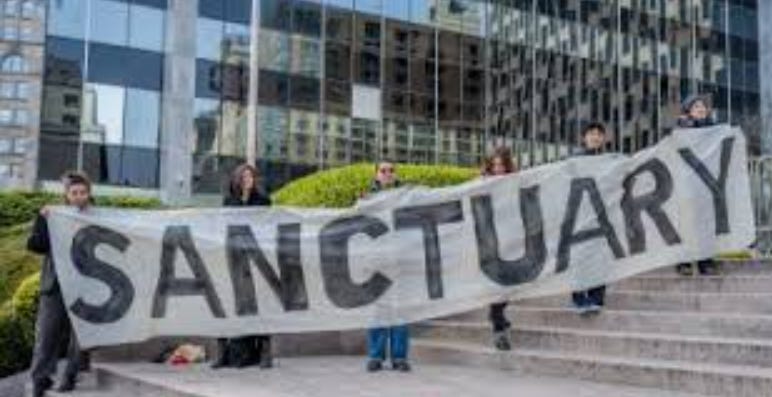
In simple terms, sanctuary cities or states limit cooperation between local authorities and federal immigration enforcement. Supporters argue these policies encourage trust between immigrants and local law enforcement. Critics argue they interfere with the rule of law and shift consequences — and cost — not only on local communities, but on every American.
Regardless of political views, the consequences are harmful.
When local governments decline to share information or cooperate with federal agencies, enforcement becomes uneven. Some communities absorb far more population growth than infrastructure was designed to handle. Housing demand rises faster than supply. Classrooms grow more crowded. Emergency rooms become busier. Local budgets stretch thin.
These pressures often fall hardest on working families — including legal immigrants — who compete for housing, services, and entry-level jobs.
Public safety is also part of the discussion. Most immigrants are not violent criminals, and it is important to say that plainly. However, when policies prevent communication between agencies, individuals with serious criminal records can remain in communities indefinitely. In those cases, policy decisions — not individual behavior — become the central issue.
Sanctuary policies also create confusion about authority. Immigration enforcement is a federal responsibility, yet the consequences of non-cooperation - or outright obstruction - are largely local. Cities thus choose to fund shelters, transportation, healthcare, and law enforcement which means taxpayers carry the burden.
At the same time, uneven enforcement encourages further strain. When laws vary widely from one city or state to another, migration patterns naturally follow perceived opportunity. This creates concentrated impact.
Recent changes in federal enforcement have begun to reintroduce clarity. When laws are applied consistently, communities are safer, better able to plan, allocate resources, and restore balance. Predictability matters — not only for citizens, but for immigrants seeking lawful, stable paths forward.
This conversation is not about rejecting newcomers. America has always welcomed immigrants who come legally and contribute to their communities. The issue is whether laws are applied fairly, humanely, and consistently — or selectively, depending on local politics.
Ultimately, sanctuary policies highlight a larger truth: when national systems fail to function properly, local communities, as well as the nation, suffer the consequences. Solutions require coordination, transparency, and respect for both the rule of law and human dignity.
Strong borders and compassionate systems are not opposites.
They are partners — and communities depend on both.
Sources
U.S. Department of Homeland Security
https://www.dhs.gov/U.S. Immigration and Customs Enforcement (ICE)
https://www.ice.gov/Government Accountability Office (GAO) — immigration enforcement reports
https://www.gao.gov/Congressional Research Service — sanctuary jurisdiction analysis
https://crsreports.congress.gov/National Conference of State Legislatures (NCSL) — sanctuary policy overview
https://www.ncsl.org/
As always, do your own research and make up your own mind.
White paper on land and water rights: Property Rights and Freedom: A White Paper on America’s Disappearing Land
United we stand. Divided we fall. We must not let America fall.
VoteTexas.gov, https://www.votetexas.gov/get-involved/index.html
Disclaimer:
As always, do your own research and make up your own mind. This Substack is provided for informational and commentary purposes only. All claims or statements are based on publicly available sources and are presented as analysis and opinion, not legal conclusions.
No assertion is made of unlawful conduct by any individual, company, or government entity unless such claims are supported by formal public records or verified legal documents. The views expressed here reflect my personal perspective on property rights and land use issues.
While I strive for accuracy and transparency, readers are encouraged to verify all details using the official sources and references provided. Any references to third-party material are included solely for your consideration and do not necessarily reflect my views or imply endorsement.
If you share this content, please include this disclaimer to preserve context and clarity for all readers.
Until next time…
Please share your thoughts in the comments. Or email me, and let’s have a problem-solving conversation. I welcome ‘letters to the editor’ type emails and may publish yours. I hope we can create a caucus with positive, back-to-the-founders’-dream-for-America results. Have a topic you want to know more about?
Some housekeeping…
Going forward, you may need to check your spam folder. And please mark this address as ‘not spam.’ If the newsletter isn’t in your spam folder either, you should look in the Promotions tab.
You can always see everything on the website, RationalAmerican.org.
Thanks again for reading! I’m glad you’re here!