

Hi friends,
This article is great, but a bit long. I wanted to share the overall perspective and philosophy, so I asked AI to summarize. That doesn’t mean you shouldn’t read the whole thing, just that I don’t want anyone to miss out because of length. :-)
Happy 250th anniversary of America’s Declaration of Independence!
Executive Summary: Is the American Experiment Legitimate?
This article asks a question Americans do not often state plainly but debate constantly: Is our system of government legitimate? In other words, who has the right to govern, by what authority, through what institutions, and for what purpose?
The author argues that the Declaration of Independence gives the American answer. Government is legitimate when it secures the equal, God-given rights of the people — including life, liberty, and the pursuit of happiness — and when it derives its just powers from the consent of the governed.
But the Declaration does not say legitimacy comes merely from a particular form of government. Its first concern is function: Does the government protect the rights of the people? The American Revolution, in this view, was not simply a rejection of monarchy as a form. It was a rejection of a government that had stopped securing the rights of the colonists and had begun violating them.
Still, the article explains that consent logically points toward representative government and majority rule. If all people are equal, and if government requires their consent, then permanent minority rule cannot be legitimate. Lincoln later made this point clearly: without majority rule, the alternatives are anarchy or despotism.
Yet majority rule also creates a serious danger. A majority can become oppressive. It can use political power to trample the rights of minorities or individuals. So the central American problem was never simply, “How do we let the majority rule?” It was, “How do we allow majority rule while still protecting the rights of everyone?”
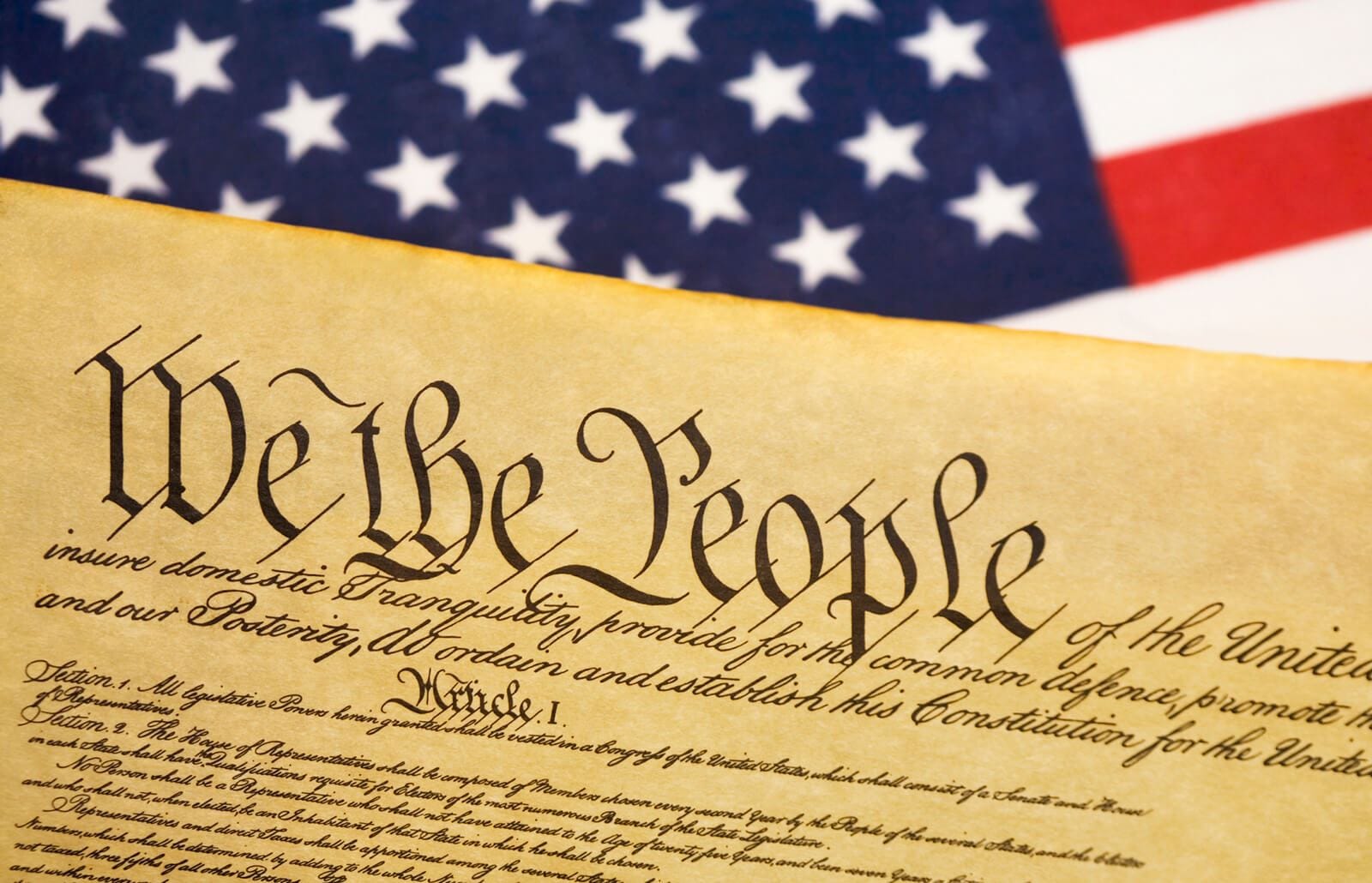
That is where the Constitution comes in. The author argues that the Constitution was designed to meet the test posed by the Declaration. It accepts the necessity of majority rule but restrains narrow, temporary, or passionate majorities through checks and balances, separation of powers, federalism, two houses of Congress, and an independent judiciary.
In this view, the Constitution’s slowness is not a defect. It is part of the design. The system forces negotiation, compromise, and coalition-building before power can be exercised. That can be frustrating, but it helps prevent rash decisions, mob rule, and the tyranny of bare majorities.
The article highlights James Madison’s warning in Federalist No. 10: the greatest danger in a republic is a majority faction that sacrifices the public good or the rights of others to its own interests. The Constitution was built to preserve self-government while reducing that danger.
The author also emphasizes that Congress is supposed to be the main arena for this negotiation. When Congress fails to do its job, the whole constitutional system suffers. The president and courts have important roles, but lawmaking is meant to happen through representative deliberation.
The article’s bottom line is that America’s constitutional system has endured not because it is efficient, but because it is legitimate, adaptable, and protective of liberty. Its structure helps balance majority rule with equal rights — a difficult but essential task.
As America approaches the 250th anniversary of its founding, the question is not whether the Declaration and Constitution are still capable of meeting the challenges ahead. The real question is whether Americans still understand them well enough, and value them enough, to preserve and use them wisely.
Source: https://thedispatch.com/next-250/american-experiment-declaration-constitution-founders/
As always, do your own research and make up your own mind.
White paper on land and water rights: Property Rights and Freedom: A White Paper on America’s Disappearing Land (8/13/2025)
United we stand. Divided we fall. We must not let America fall.
VoteTexas.gov, https://www.votetexas.gov/get-involved/index.html
Disclaimer:
As always, do your own research and make up your own mind. This Substack is provided for informational and commentary purposes only. All claims or statements are based on publicly available sources and are presented as analysis and opinion, not legal conclusions.
No assertion is made of unlawful conduct by any individual, company, or government entity unless such claims are supported by formal public records or verified legal documents. The views expressed here reflect my personal perspective on property rights and land use issues.
While I strive for accuracy and transparency, readers are encouraged to verify all details using the official sources and references provided. Any references to third-party material are included solely for your consideration and do not necessarily reflect my views or imply endorsement.
If you share this content, please include this disclaimer to preserve context and clarity for all readers.
Until next time…
Please share your thoughts in the comments. Or email me, and let’s have a problem-solving conversation. I welcome ‘letters to the editor’ type emails and may publish yours. I hope we can create a caucus with positive, back-to-the-founders’-dream-for-America results. Have a topic you want to know more about?
Some housekeeping…
Going forward, you may need to check your spam folder. And please mark this address as ‘not spam.’ If the newsletter isn’t in your spam folder either, you should look in the Promotions tab.
You can always see everything on the website, RationalAmerican.org.
Thanks again for reading! I’m glad you’re here!